The research behind the festival
Agency isn't a nice idea. It's the evidence base.
Forty years of motivation research, an OECD learning framework and a five-year Harvard study keep arriving at the same place: students learn more when they own the work.
01 The problem
Engagement doesn't decline by accident.
Gallup's long-running student poll has repeatedly found the same pattern: most fifth graders describe themselves as engaged in school, and by high school most don't.
The usual explanations blame adolescence, phones or effort. But the decline tracks something else closely — the steady removal of choice. As students move up, they choose less about what they study, how they show what they know, and who ever sees it.
The students telling us school isn't working are describing a design problem, not a character flaw.
02 What the research says
Five findings that keep recurring.
Motivation has three ingredients, and one is autonomy
Self-determination theory holds that people sustain effort when three needs are met: autonomy, competence and relatedness. Remove the sense of choosing and motivation shifts from internal to external — which works until the reward stops.
The OECD put agency at the center of its 2030 framework
The Learning Compass 2030 defines student agency as the capacity to set a goal, reflect and act responsibly to effect change — and treats it as a core outcome of schooling rather than a byproduct of it.
Deep learning is rarer than we think, and looks like apprenticeship
After years observing American high schools, Jal Mehta and Sarah Fine found powerful learning was the exception — and where it existed it looked less like instruction and more like students being inducted into how real practitioners work.
A real audience raises the quality of the work
Ron Berger's case for an ethic of excellence rests on public presentation and multiple drafts. When students know their work will be seen by people beyond their teacher, revision stops being a chore and becomes the point.
Creative and civic capacity can be deliberately cultivated
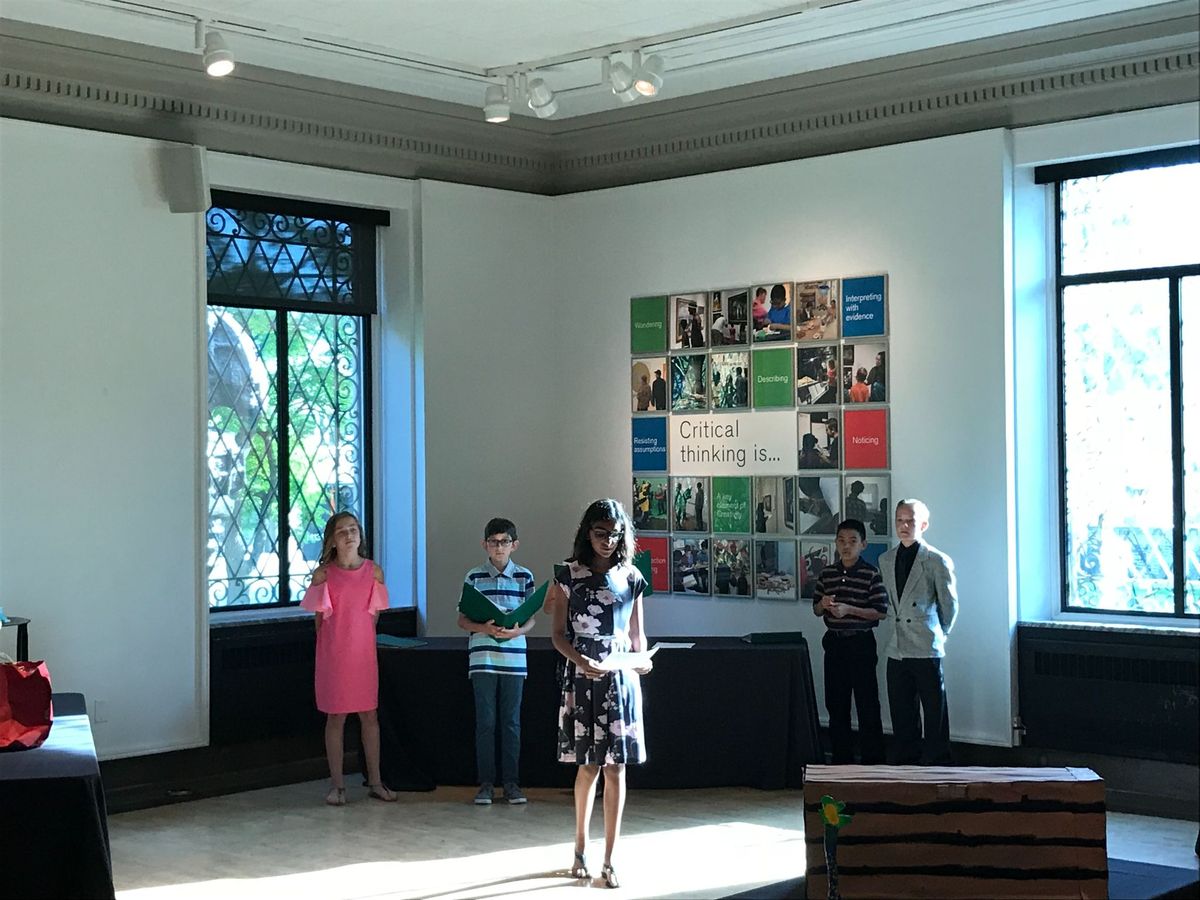
Harvard Project Zero's Cultivating Creative and Civic Capacities initiative, a five-year collaboration with the Columbus Museum of Art, studied how classrooms build these dispositions on purpose rather than by luck. Our founder was part of that work, and writes about it at Grow Creative Thinkers.
Instead of trying to fix students to make them more school-ready, we should fix the system to make it more student-ready.Jason Blair · Founder, Agents of Change Festival
03 Why a festival
The gap between knowing and seeing.
None of the research above is seriously contested. The problem is that reading it changes almost nothing.
A principal can be handed every study on this page and still not know what an agentic classroom looks like on a Tuesday. A parent can agree with the theory and still worry their child is falling behind. A teacher can believe all of it and have no idea how a colleague makes it work.
Two hours in a building full of students explaining their own work does what a citation cannot. That's the whole design of the evening.
04 Go deeper
Where to read further.
Teachers: we're glad to send a short summary you can share with an administrator.